






Tennis Court Construction
Tennis is a globally prestigious sport that requires a meticulously engineered and properly constructed court to ensure optimal gameplay, correct ball bounce, and maximum player safety. Whether for international professional tournaments, elite sports clubs, luxury resorts, or private residential estates, building a tennis court involves rigorous civil planning, certified material selection, and strict adherence to international sports architecture. This definitive guide covers the essential phases of professional tennis court construction, ITF-approved surface types, structural zoning, and key cost components.
1. Planning, Orientation, and Site Preparation
The layout and preparation phase directly determines the longevity of the sporting infrastructure. Key architectural requirements include:
- Site Selection: Prioritize a location with naturally low water tables, stable soil mechanics, and zero environmental subsidence risks.
- Optimal Court Orientation: To prevent blinding sun interference for players during serve and volley sequences, the court's longitudinal axis must strictly be oriented North-South.
- Precise Space Requirements: The official playing area regulated by the International Tennis Federation (ITF) measures 23.77m x 10.97m (78ft x 36ft) for doubles matches. However, the total required footprint including safety run-back zones must be at least 36.57m x 18.29m (120ft x 60ft).
- Permits and Zoning Laws: Ensure compliance with localized municipal building codes, environmental runoff limits, and sports facility lighting regulations before breaking ground.
2. Heavy Excavation and Sub-base Infrastructure Engineering
A tennis court is only as stable as the civil engineering beneath its surface. To prevent future sub-surface cracking, the foundation is built using a multi-layered structure:
- Excavation & Earth Stabilization: Removing all organic topsoil, vegetation, and loose debris, followed by deep mechanical soil compaction.
- Advanced Perimeter Drainage Networks: Installing perimeter French drains or slotted drainage pipes with a uniform 0.83% to 1% lateral slope to ensure rapid gravity-fed rainwater evacuation.
- Sub-base base Installation: Laying down compacted crushed aggregate stones, capped with a flawless dual-layer application of hot-mix binder course asphalt or reinforced concrete to guarantee absolute surface planarity.
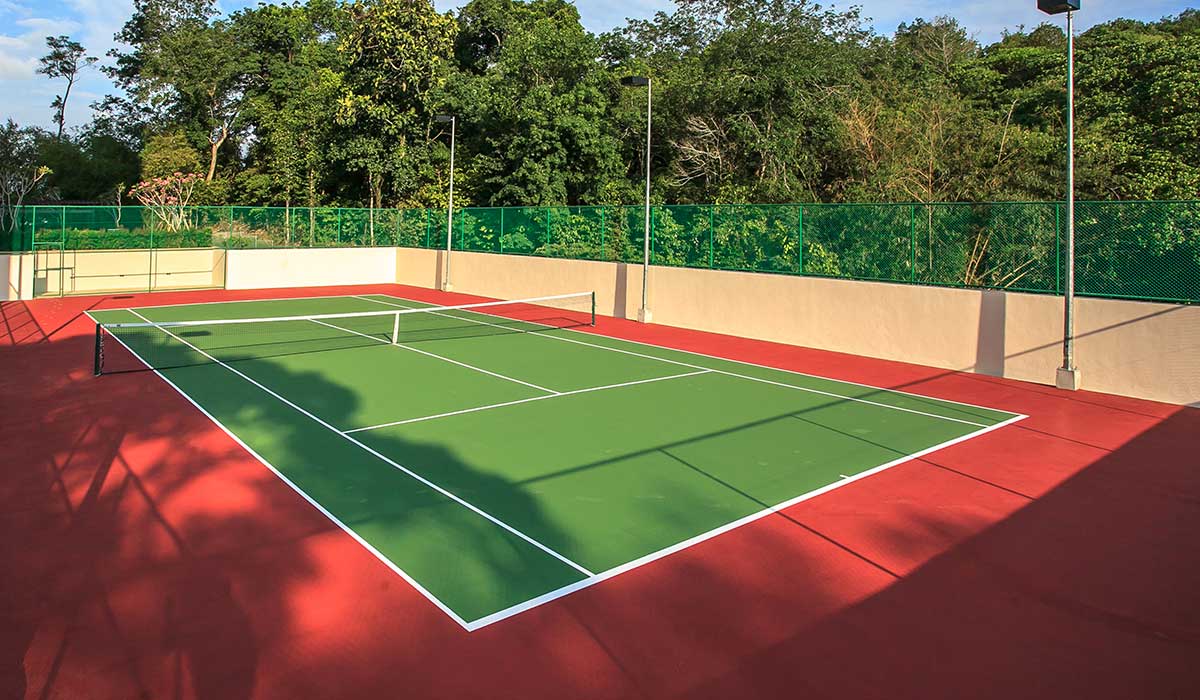
3. ITF-Approved Tennis Court Surface Classification
The chosen playing surface directly dictates the court's maintenance cycle, structural lifespan, and the specific **Court Pace Rating (CPR)**. At Integral Spor, we specialize in constructing surfaces classified under official ITF (International Tennis Federation) speed categories:
Technical Comparison: Acrylic Hard Courts vs. Synthetic Grass
Below is the technical data matrix for the two most highly requested commercial tennis court surfaces manufactured and deployed globally by Integral Spor:
| Technical Property | Acrylic Hard Court (Cushion System) | Synthetic Tennis Turf (Artificial Grass) |
|---|---|---|
| Material Composition | Resilient acrylic resin layers mixed with specialized silica sand over asphalt/concrete. | UV-stabilized polyethylene monofilament or fibrillated fibers filled with rounded silica sand. |
| ITF Pace Classification | Category 2 (Medium-Slow) to Category 4 (Fast) depending on sand graduation. | Category 3 (Medium) to Category 4 (Fast) providing a classic grass-court feeling. |
| Shock Absorption | Excellent cushioning via multi-layered EPDM rubber granule mats (3mm to 8mm Cushion). | High joint comfort due to dense synthetic turf piling and uniform sand infill. |
| Weather Resilience | 100% waterproof, rapid evaporation, highly resistant to extreme UV rays and fading. | Highly porous backing with integrated drainage holes, completely frost-resistant. |
| Maintenance Intensity | Low. Requires routine pressure washing and resurfacing every 5 to 7 years. | Medium-Low. Requires periodic brushing to redistribute silica sand evenly. |
Alternative Structural Surfaces:
- Natural Clay Courts: Known for slow gameplay and high ball slide (e.g., Roland Garros standards). Constructed using a base of crushed brick and limestone. They deliver supreme joint safety but demand continuous daily watering, rolling, and line-brushing.
- Traditional Natural Grass: Extremely fast gameplay with low ball bounce (e.g., Wimbledon standards). It requires continuous professional greenkeeping, specialized irrigation, and carries high seasonal maintenance costs.
4. Commercial Tennis Court Categorizations
Modern sports facilities segment tennis court styles based on environmental protection and multi-sport adaptability:
a) Outdoor vs. Fully Enclosed Indoor Courts
- Outdoor Courts: Must be built utilizing weather-proof, flexible acrylic systems or synthetic turf treated with advanced UV inhibitors to prevent thermal expansion and cracking.
- Indoor Tennis Halls: Often enclosed within heavy structural steel hangars or architectural air domes, requiring specialized glare-free indirect lighting and automated HVAC ventilation systems for year-round operation.
b) Single-Purpose vs. Multi-Sport Complexes
While professional venues require single-use, laser-focused tennis courts, school systems and public parks optimize land ROI by investing in multi-purpose fields. These adaptable surfaces combine tennis layouts with integrated basketball, volleyball, or professional padel court installation boundaries using contrasting UV paint schemes.
5. Industrial Fencing and High-Lux LED Lighting Systems
- Heavy-Duty Fencing Structures: Standard courts require a perimeter boundary fence with a height of 3.0m to 4.0m. We utilize galvanized steel pipe frameworks wrapped in electrostatic PVC-coated chain-link mesh to absorb heavy ball impacts quietly.
- Horizontal LED Sports Lighting: For nighttime tournament play, we mount high-efficiency LED floodlights on 6.0m to 8.0m poles. The system is engineered to provide an even lux distribution (ranging from 500 to 750 Lux) across the entire playing envelope without generating shadows or blinding glare.
6. Professional Net Systems and Ancillary Court Hardware
To finalize a turnkey installation, heavy-duty structural accessories are integrated into the foundations:
- Internal-Winch Net Posts: Hot-dip galvanized or aluminum posts anchored into concrete sleeves, outfitted with brass internal gears to maintain perfect net tension according to ITF rulebooks.
- Perimeter Windscreens: Heavy-duty, air-permeable mesh fabrics attached to the fencing to dramatically reduce crosswind interference and provide high visual contrast for optimal ball tracking.
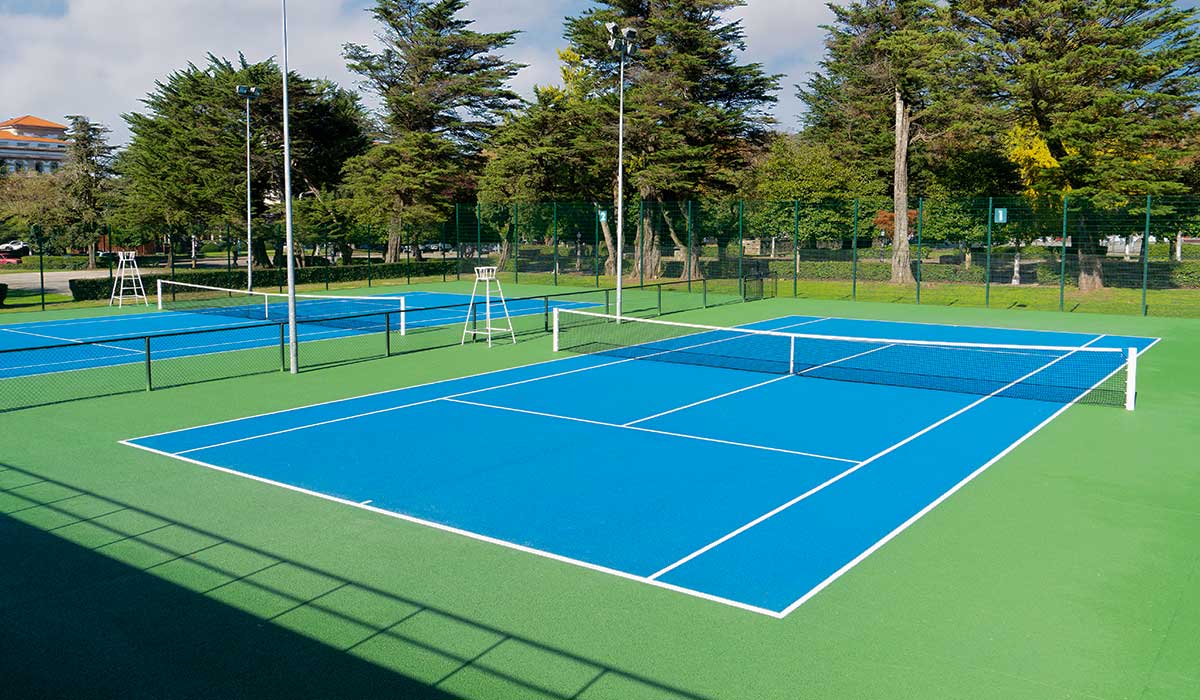
7. Turnkey Budget Planning & Cost Factors
The total capital expenditure required for tennis court construction varies depending on raw material pricing, geographic shipping distance, pile thickness, and required sub-base civil works. Investing in premium materials—such as multi-layered acrylic cushion systems or premium monofilament turf—drastically reduces long-term maintenance costs and extends the structural life of the facility up to 15-20 years.
Primary budget drivers include:
- Sub-base civil works: Concrete vs. asphalt paving and total excavation volume.
- Surface System: Standard 3-layer acrylic vs. premium multi-layer cushion or specialized turf dtex weight.
- Ancillary additions: Upgrading to panoramic fencing or high-lux stadium lighting grids.
Global Turnkey Sports Infrastructure Partner: Integral Spor
As an internationally trusted manufacturer and general contractor, Integral Spor engineers and delivers high-performance tennis courts compliant with global elite competition standards. Operating with automated production lines in Turkey, we export, ship, and execute projects seamlessly across Europe, the Middle East, Africa, Central Asia, and the Americas.
Avoid expensive installation defects by working with an experienced engineering crew. For personalized architectural blueprints, official material datasheets, or a localized project cost estimation, contact our multilingual support team today. Reach our international headquarters directly at +90 (212) 678 13 13 or submit your technical tender specifications through our official digital communication portals to receive a complete quotation within 24 hours.
Other News
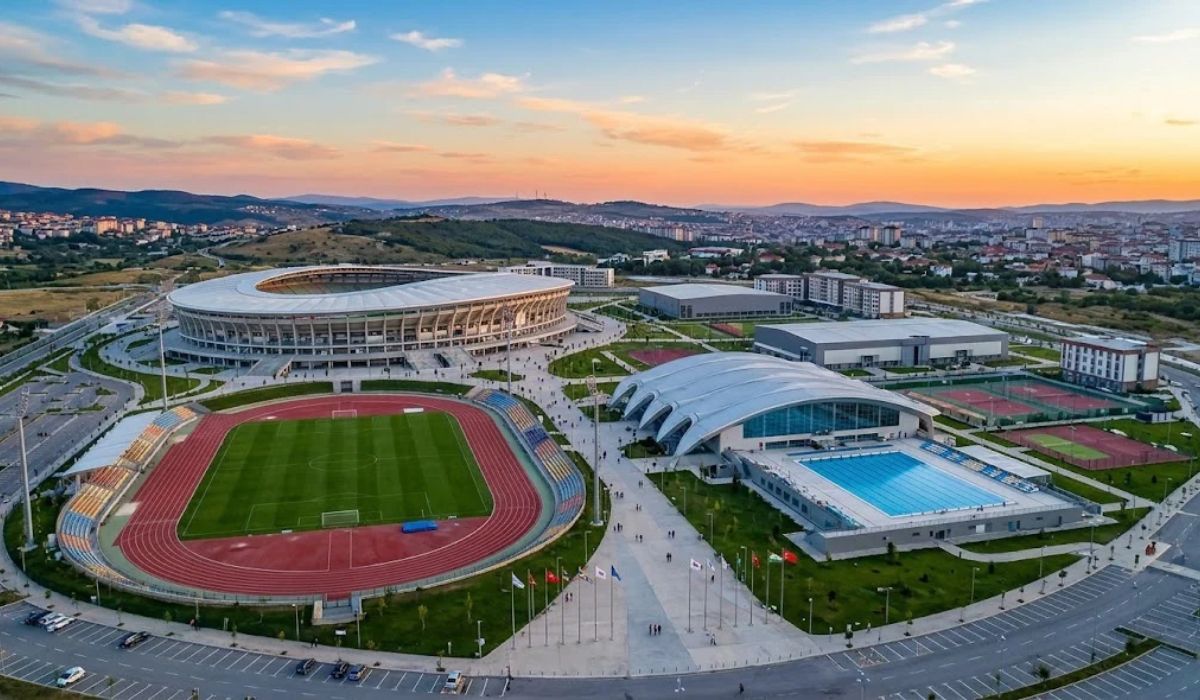
23/10/2026
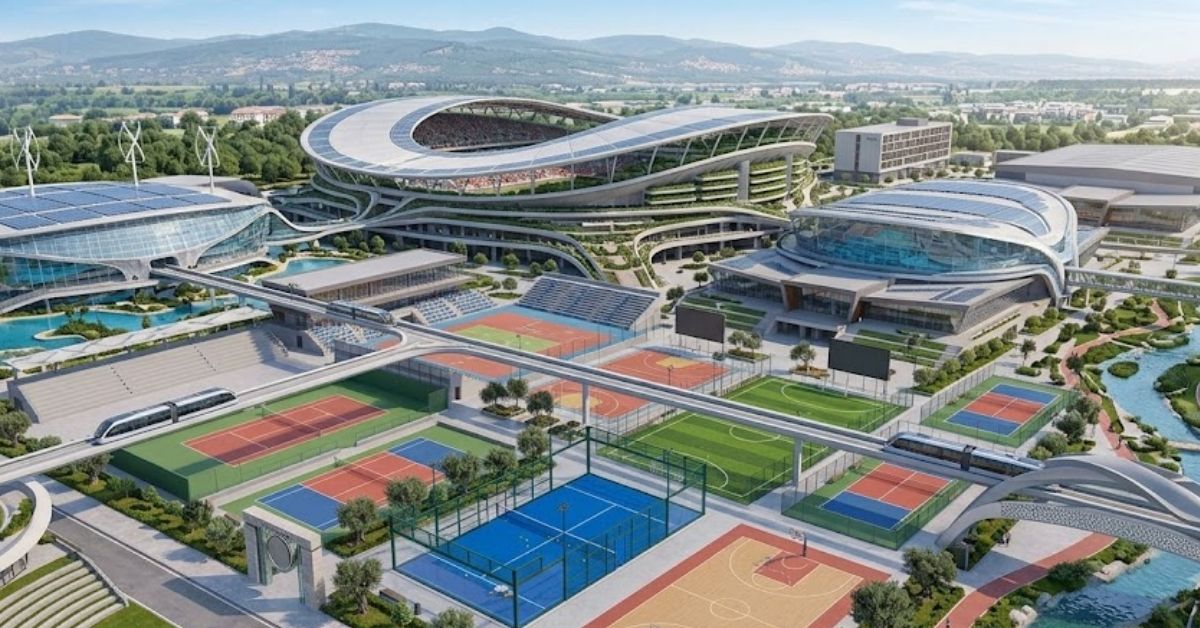
An Olympic sports complex typically includes a stadium, an athletics track, an Olympic swimming pool, indoor sports halls, outdoor fields and courts, plus stands, locker rooms and supporting infrastructure. The full list varies with the project's purpose, the sports hosted and the size of the site.
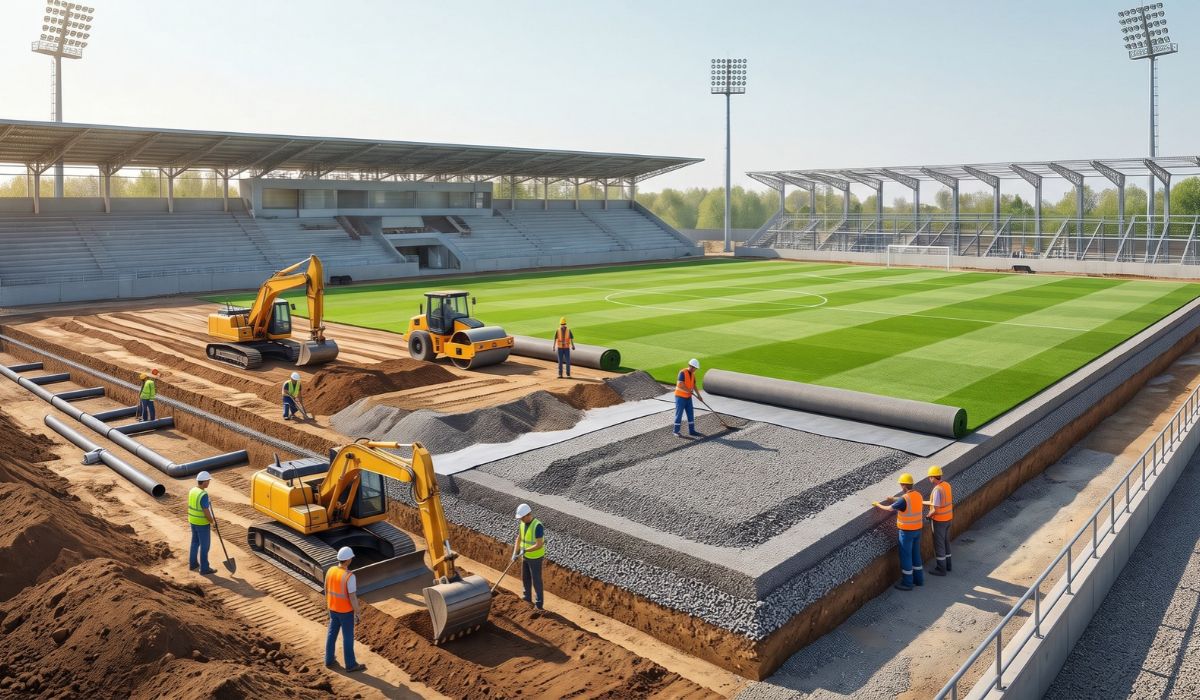
21/10/2026
Football field base construction involves a soil survey, excavation and grading, drainage lines, compacted crushed stone load-bearing layers and a smooth fine-grading layer. Artificial, natural or hybrid turf is then installed on top. Layer thicknesses vary with the soil, the project design and the product manufacturer's specification.
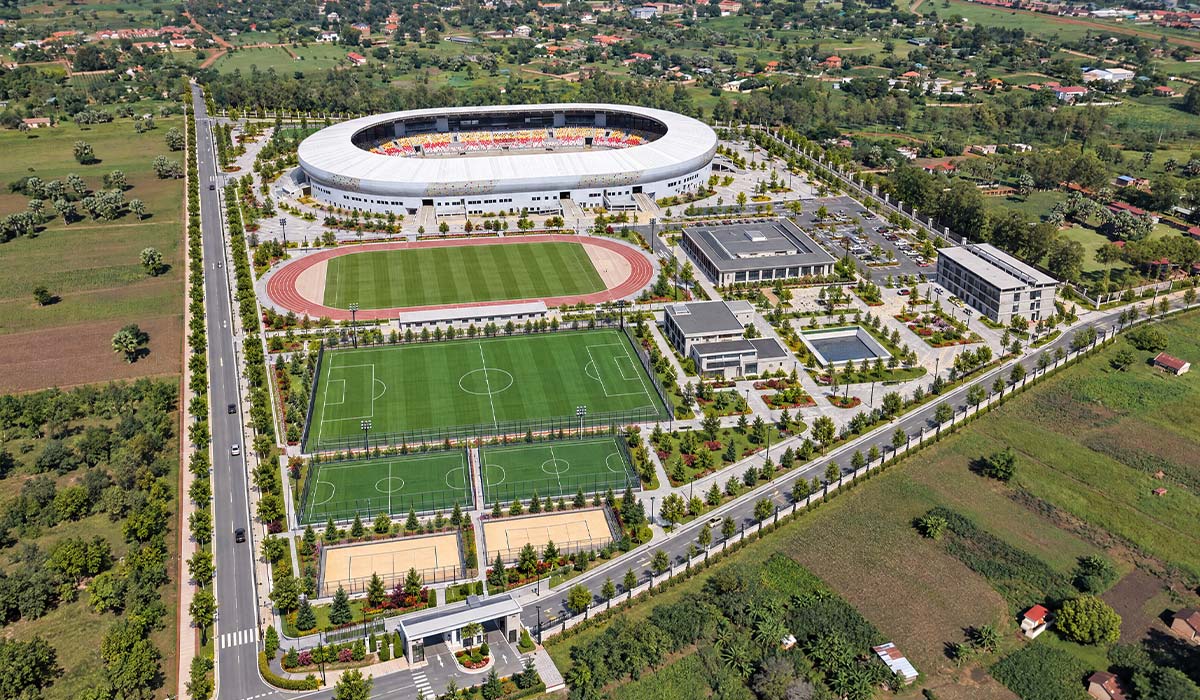
15/10/2026
Bring irrigation, lighting, energy, and security together in a single system with AI-powered smart stadium construction. Discover smart transformation with Integral Spor.

09/09/2026
Flag football is heading to the Olympics in 2028. Here is what investors need to know about field dimensions, construction requirements and the factors that drive cost.
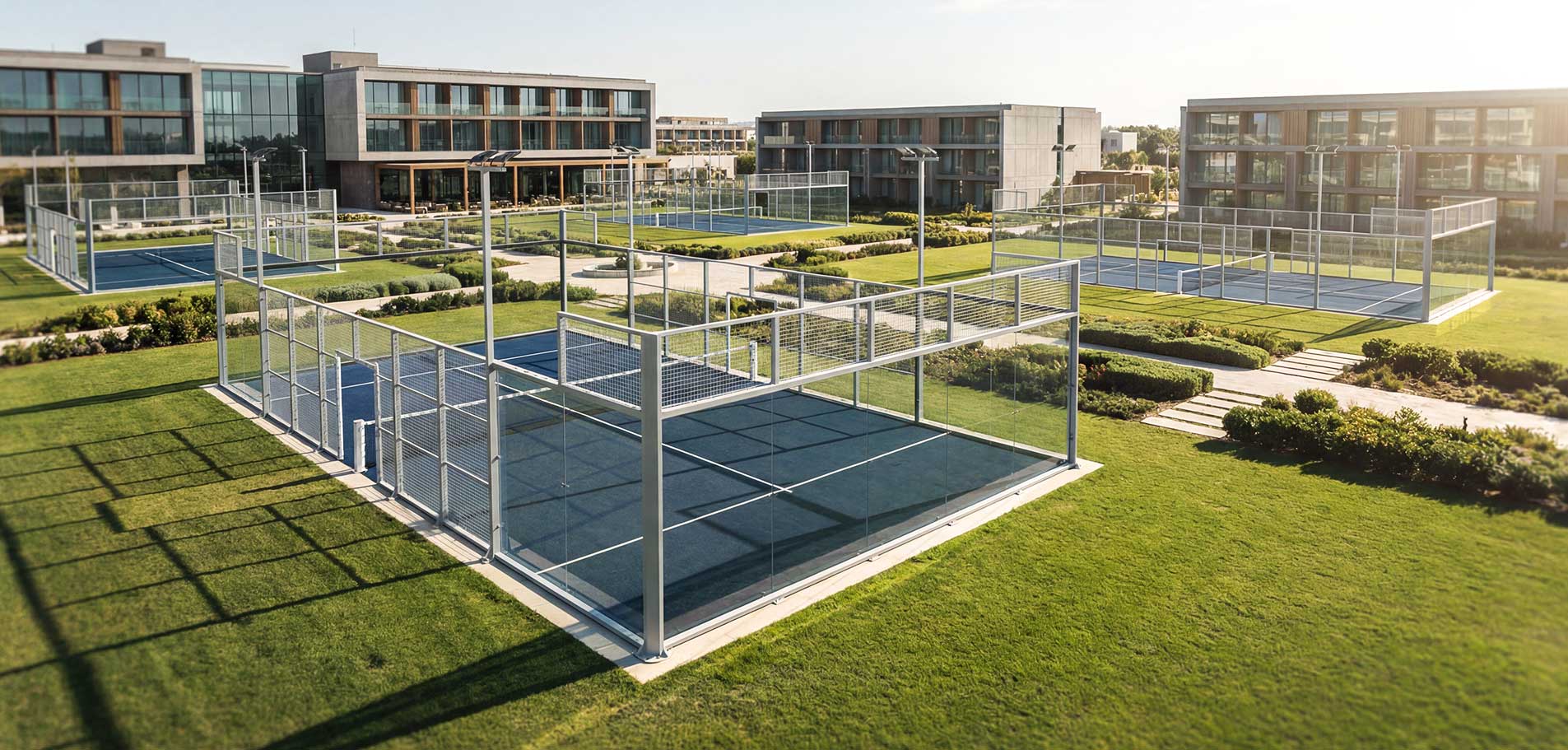
08/09/2026
Converting an unused tennis court into a padel court turns space you already own into a new investment opportunity. Here is how the conversion works, what it costs, and which court type fits your site.
19/08/2026
Renovation, modernization and capacity expansion for existing sports facilities, from stadiums to indoor arenas. Discover how the right engineering can take your venue to the next level.