






How to Prepare a Football Field Base
A football field base is the whole system of soil, drainage and load-bearing layers beneath the surface. However good the surfacing is, if the structure under it is flawed, the field will hold water, settle or play unevenly. That is why the process starts well before any turf is laid and follows a set order.
Why Is the Football Field Base Important?
The base lets the field drain water, carry loads and keep the playing surface level over the years. Because mistakes can only be corrected by removing the surface once it has been laid, the most expensive repairs come from shortcomings at this stage.
Whether the field is artificial or natural turf, the logic is the same: first the soil, then water management, then the load-bearing layers. If you would like to look at different field types, you can see the football fields page.
What Happens During the Soil Survey and Design Stage?
The first step is examining the site with a soil survey. The survey shows the soil's bearing capacity, its clay or sand content, the groundwater level and the natural slope of the land.
The design is prepared from this data. It sets out the pitch and safety zone dimensions, the direction of the slope, the layout of the drainage lines, the layer cross-sections and the surfacing type. The regulations of the relevant federation should be used as the basis for dimensions.
-
Soil boring and laboratory analysis
-
Topographic survey and level plan
-
Assessment of groundwater and rainfall conditions
-
Determining the layer cross-section according to the surfacing type
How Are Excavation, Grading and Compaction Done?
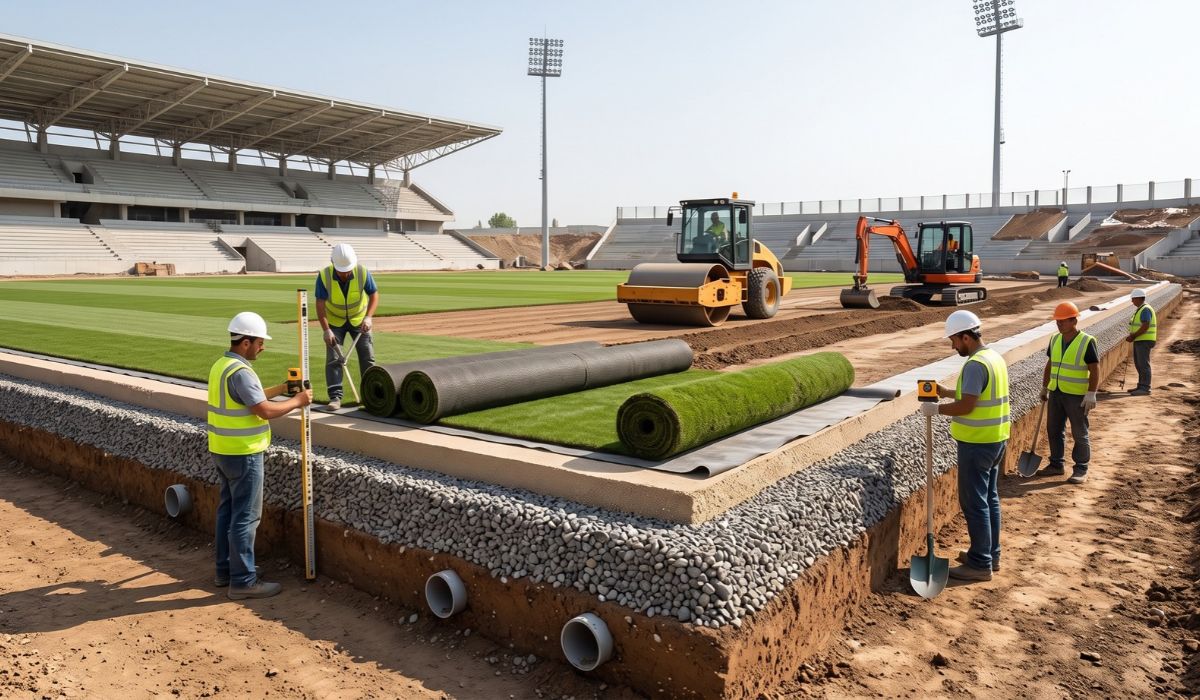
During excavation, topsoil and soft layers are removed until the levels in the design are reached. The subgrade is then graded and compacted with a roller. The aim is a firm, even base for the layers that will go on top.
To keep water from pooling on the surface, the field is usually sloped slightly toward the edges. The amount of slope varies with the surfacing type and the specification. Organic or extremely soft soils are removed and replaced with suitable fill material.
How Is the Drainage System Installed?
Drainage is built from perforated pipes placed under the field, along with gravel or crushed stone backfill trenches. These lines collect the water and carry it to a collector line outside the field, and play continuing after rain depends on this.
The lines can be laid in a herringbone or parallel pattern, chosen according to the soil's permeability and the design. The pipes are wrapped in geotextile so that fine particles do not clog the lines. On artificial turf fields, using a drainage shockpad helps water drain beneath the surfacing as well.
How Are the Load-Bearing Layers Built?
The load-bearing layers are laid from coarse-grained to fine-grained, and each one is compacted separately and checked for level. The typical sequence is summarized in the table.
|
Layer |
Function |
Note |
|
Compacted natural soil |
Supports the whole structure |
May be improved based on the survey result |
|
Crushed stone load-bearing layer |
Distributes load, lets water pass |
Thickness is set in the design |
|
Fine-grading layer |
Makes the surface smooth |
Chosen according to the surfacing type |
|
Shockpad (optional) |
Provides impact absorption |
Used with artificial turf |
|
Surfacing |
Forms the playing surface |
Artificial, natural or hybrid turf |
Layer materials and thicknesses are determined by the design and the product manufacturer's specification, so applying generic values to every field would not be correct.
How Does the Choice of Surfacing Affect the Base?
The surfacing type determines the details of the base. Artificial turf is thin, so it shows imperfections in the base, which means grading has to be done precisely. Natural turf needs a sand-blended growing layer for the root zone, along with irrigation infrastructure. Hybrid turf combines features of both approaches.
On artificial turf fields, infill materials such as silica sand and SBR or cork can be used. The type and amount are chosen according to the turf manufacturer's instructions. To read more about the installation stage separately, see the artificial turf installation article.
What Should You Watch for When Preparing the Base?
The most important point is not to move to design without a soil survey, and to check each layer before moving on to the next. Otherwise, problems only show up once the field is open for use.
-
Level and evenness measurement: Slope and surface evenness should be checked on every layer.
-
Drainage test: Water flow should be tested before the lines are covered.
-
Weather conditions: Compaction and spreading work can be disrupted in rainy weather, so the schedule should be planned accordingly.
-
Manufacturer's specification: The base requirements of the surfacing and infill products should be verified against the manufacturer's instructions.
-
Choice of contractor: Companies offering turnkey services can run the survey, base and surfacing within a single plan.
Conclusion
Football field base construction relies on preparing the soil survey, excavation, drainage and load-bearing layers in order and under control. The surfacing type changes the details, but the basic logic stays the same. The design and the manufacturer's specification should be the basis for layer dimensions, and an expert should be consulted when necessary.
Other News
21/10/2026
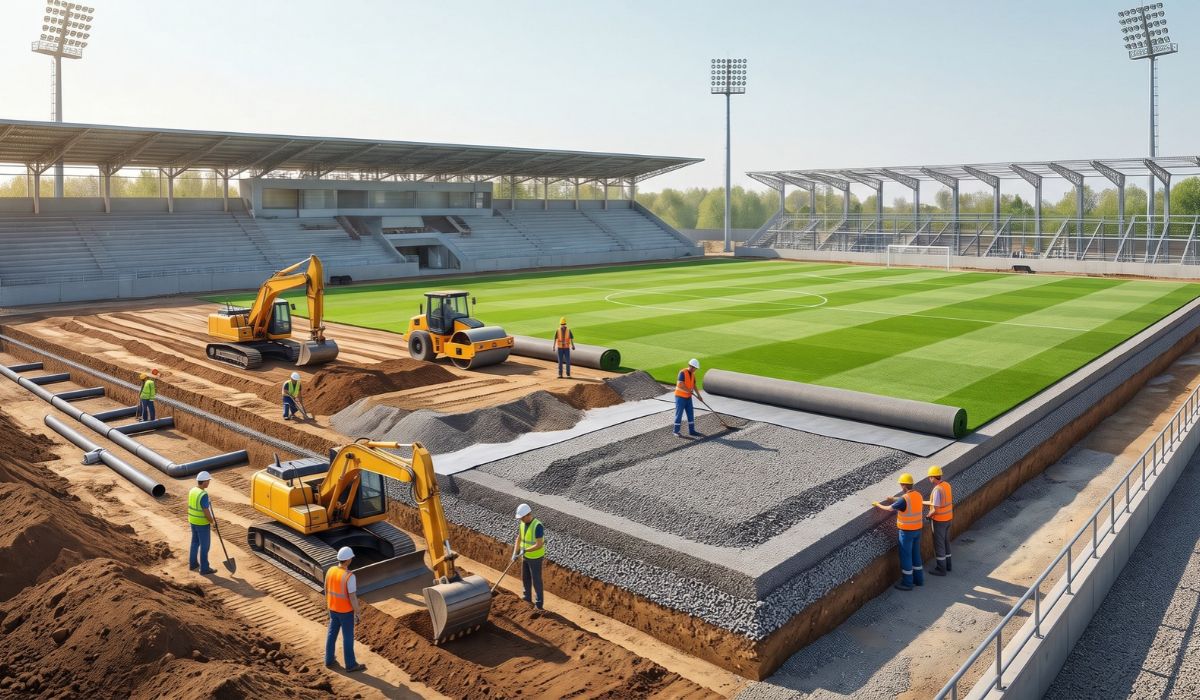
Football field base construction involves a soil survey, excavation and grading, drainage lines, compacted crushed stone load-bearing layers and a smooth fine-grading layer. Artificial, natural or hybrid turf is then installed on top. Layer thicknesses vary with the soil, the project design and the product manufacturer's specification.
15/10/2026
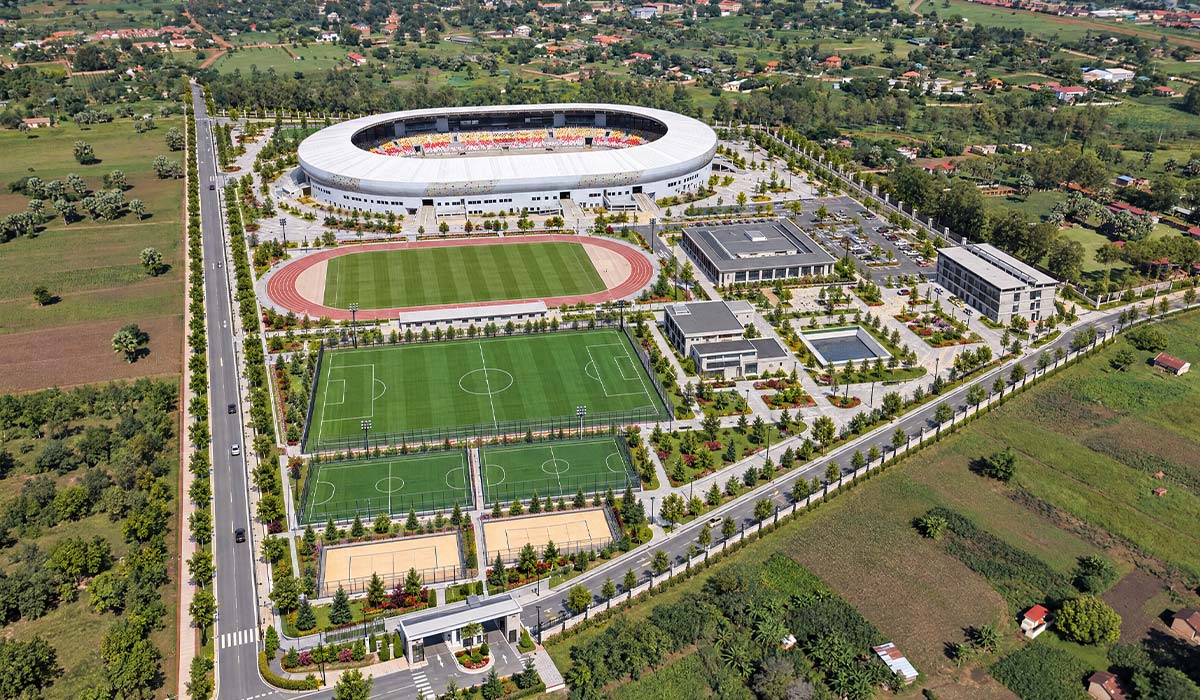
Bring irrigation, lighting, energy, and security together in a single system with AI-powered smart stadium construction. Discover smart transformation with Integral Spor.

09/09/2026
Flag football is heading to the Olympics in 2028. Here is what investors need to know about field dimensions, construction requirements and the factors that drive cost.
08/09/2026
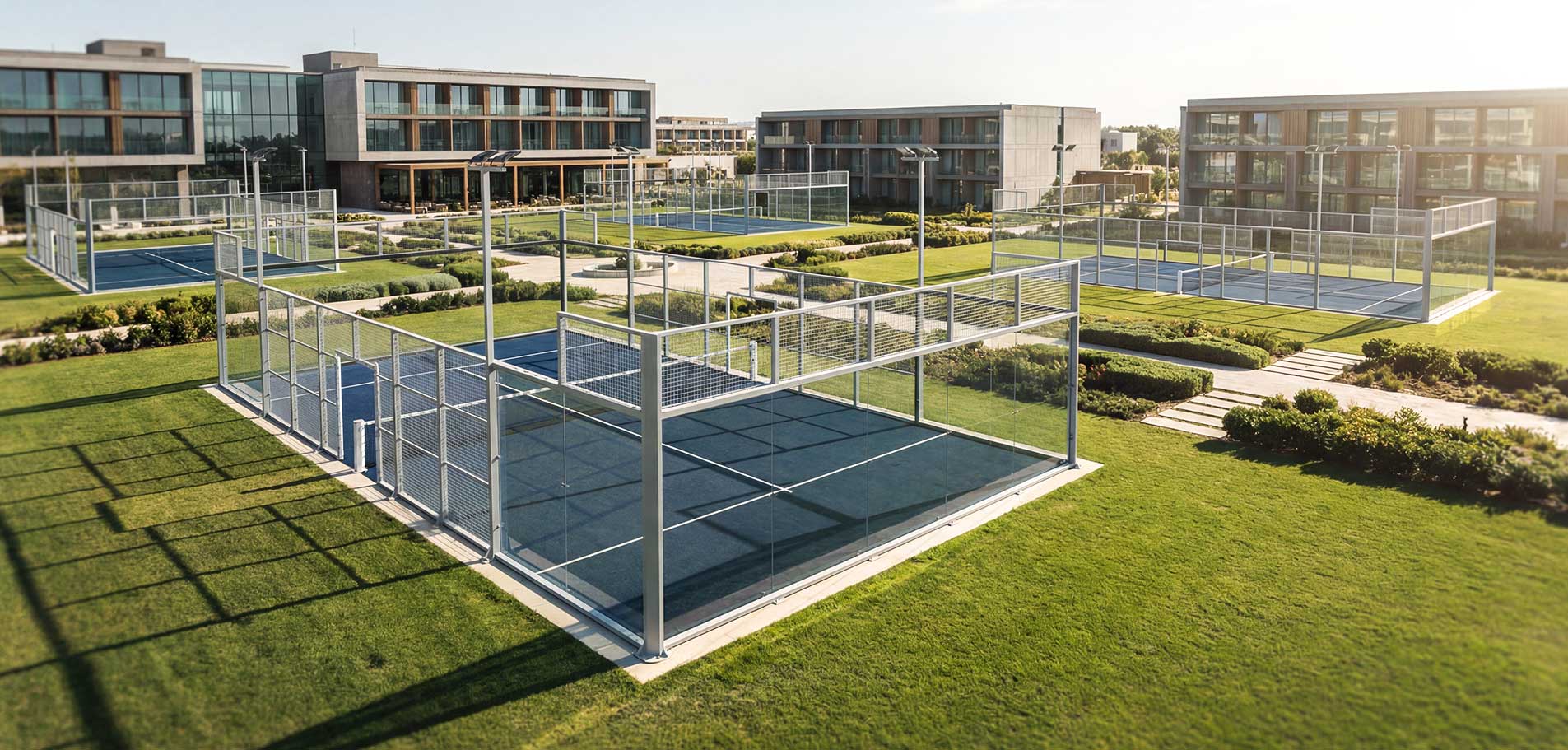
Converting an unused tennis court into a padel court turns space you already own into a new investment opportunity. Here is how the conversion works, what it costs, and which court type fits your site.
19/08/2026
Renovation, modernization and capacity expansion for existing sports facilities, from stadiums to indoor arenas. Discover how the right engineering can take your venue to the next level.