







Comprehensive Padel Court Investment Guide
With the rapid rise in the popularity of padel, the most critical decision for investors is whether the facility will be with a roof (indoor) or without a roof (outdoor). This decision directly affects your facility’s revenue potential, operating costs, and player experience.
In this guide, we examine every detail of both systems—from the construction process to operational economics—using Integral Spor’s engineering expertise.
Outdoor Padel Courts: The Pleasure of Open Air and an Economical Start
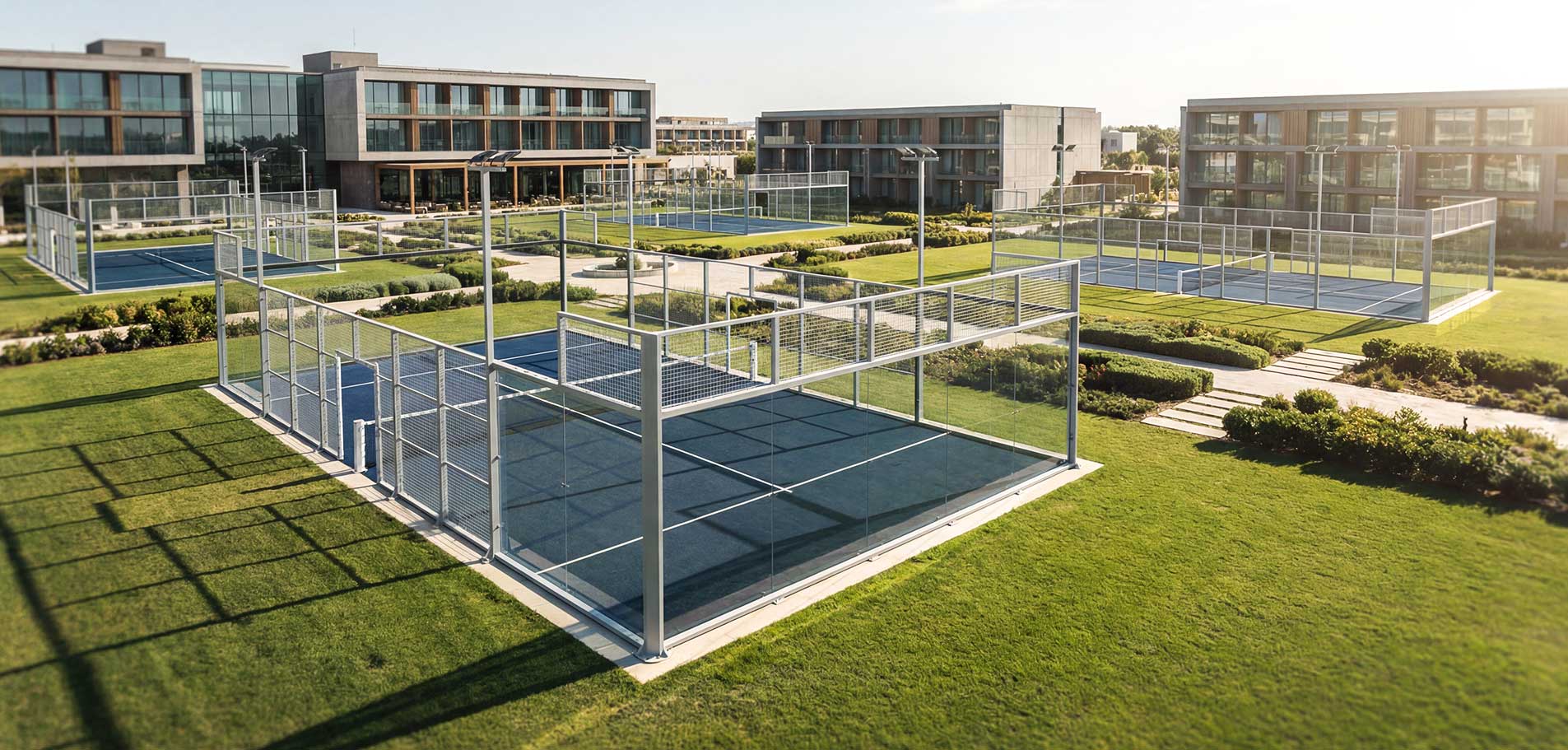
Outdoor padel courts offer gameplay entirely under open sky, benefiting from natural light and air circulation. They are ideal especially in mild climate regions and for businesses focused on the summer season. The basic structure consists of tempered glass panels, a steel frame, and artificial turf flooring.
Advantages and Disadvantages of Outdoor Padel Courts
The biggest advantages of outdoor courts are the lower initial investment cost and faster installation time. Since the roof system is excluded from the budget, installation costs decrease, and the permitting process may progress more easily due to reduced structural complexity. Additionally, they offer players a great playing experience under fresh air and natural light. Thanks to excellent natural ventilation, issues such as humidity or heat build-up—common in enclosed environments—do not occur.
However, disadvantages should not be overlooked. The most important one is the dependence on weather conditions. In cases of rain, snow, or heavy wind, there is a risk that the facility may remain closed, leading to high operational risk and seasonal income. Because they operate at full capacity only during certain seasons, the investment’s return period (payback) may be extended. Additionally, the steel structure and turf, which are directly exposed to weather conditions, may require more frequent inspections and maintenance. For night games, since there is no surface to reflect the light, higher energy consumption may be needed.
These courts are suitable for seasonal businesses, entrepreneurs prioritizing cost optimization, and hotel outdoor facilities.
Indoor Padel Courts: Uninterrupted Income in All Four Seasons
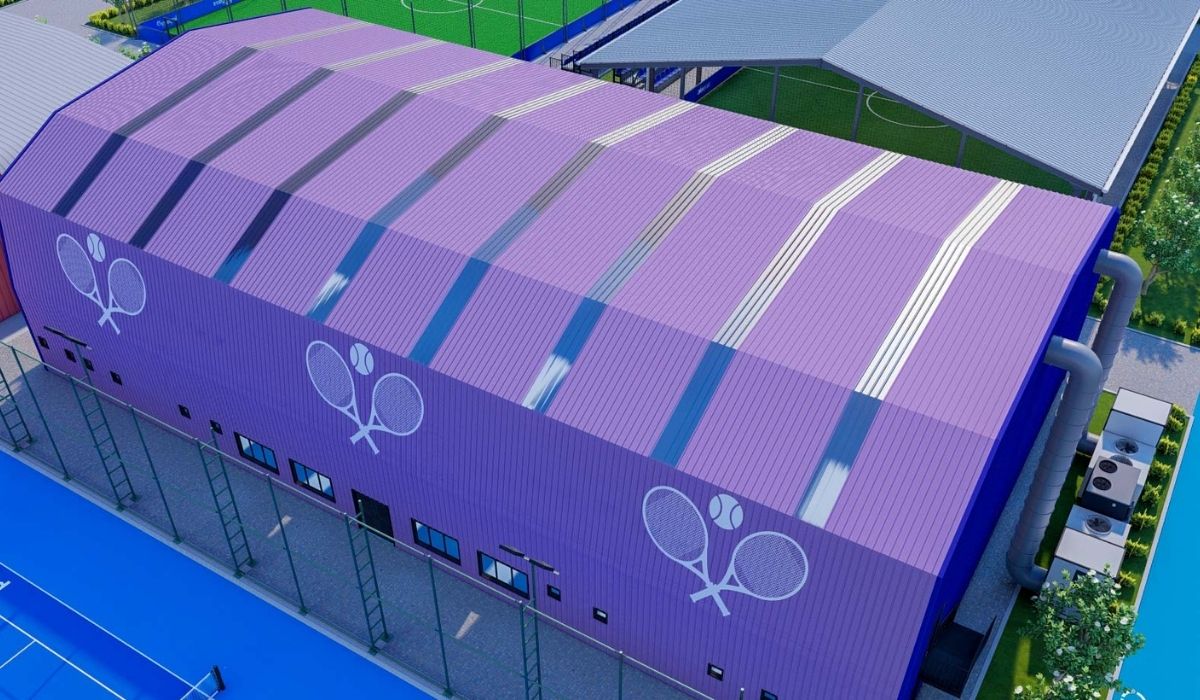
Indoor padel courts are built with a galvanized steel structure and covered with durable roofing materials, offering climate-independent use. They are indispensable for city-center facilities and centers aiming to provide professional service throughout the year.

Advantages and Disadvantages of Indoor Padel Courts
The primary advantage of indoor courts is the ability to operate in all seasons. Regardless of weather conditions, games can continue uninterrupted, providing consistent and predictable income year-round. In addition, since external factors such as wind and humidity do not affect ball movement, players always enjoy a professional and consistent playing standard. They offer long lifespan and low maintenance; the lifespan of galvanized steel structures can reach up to 25 years, and the flooring wears down less indoors. A modern and enclosed facility adds prestige and corporate brand value to the business.
As for disadvantages, the most notable is the higher initial investment cost. Due to the steel roof structure and more complex foundation/infrastructure requirements, the budget increases. Also, because of steel assembly and roofing applications, the construction period is longer. As they are considered full buildings, permit and licensing procedures may be more complex compared to outdoor courts. Finally, if the appropriate engineering design is not applied, insufficient air circulation in summer may lead to heat and humidity build-up inside.
This system is ideal for sports clubs, commercial investors seeking uninterrupted year-round income, and regions with harsh weather conditions.
Decide According to the Purpose of Your Investment
At Integral Spor, we clearly emphasize: There is no “right” option, there is the option that is “most suitable for you” and “serves your investment purpose.”
The main criteria that should guide your investment preference can be summarized as follows:
- Main Objective: Outdoor courts focus on cost optimization and seasonal enjoyment, while indoor courts prioritize year-round income and professionalism.
- Investment Cost and Construction Period: Outdoor courts have lower initial investment cost and shorter construction time; indoor courts have higher costs and longer construction periods.
- Revenue Flow and Risk: Outdoor courts have seasonal and risky income flow; indoor courts provide stable, year-round income with low risk.
- Game Quality: In outdoor courts, game quality depends on weather conditions; in indoor courts, it is consistent and standardized.
If your goal is year-round playing comfort and long-term, stable commercial income, indoor padel court construction is the most logical choice. If you aim to offer an open-air playing experience and operate within a limited season with a budget-optimized low starting capital, outdoor padel court construction is ideal for you.
Integral Spor provides long-lasting and aesthetic solutions that comply with FIP standards by considering the climate conditions of your project’s region, soil analysis, and your operational goals.
Other News

09/09/2026
Flag football is heading to the Olympics in 2028. Here is what investors need to know about field dimensions, construction requirements and the factors that drive cost.
08/09/2026
Converting an unused tennis court into a padel court turns space you already own into a new investment opportunity. Here is how the conversion works, what it costs, and which court type fits your site.
19/08/2026
Renovation, modernization and capacity expansion for existing sports facilities, from stadiums to indoor arenas. Discover how the right engineering can take your venue to the next level.