







Step-by-Step Athletics Track Construction
Athletics is a prestigious Olympic sport for both professional athletes and amateurs, requiring highly dedicated, engineered tracks for optimal performance in running, jumping, and throwing events. Constructing a high-quality athletics track is crucial for enhancing athletes' performance, breaking records, and ensuring a safe, injury-free training environment. In this comprehensive guide, we will delve into professional athletics track specifications, international dimensions, specialized IAAF/World Athletics surface types, the technical stages of construction, and how Integral Spor delivers turnkey stadium projects worldwide.
What is an Athletics Track?
An athletics track (or running track) is a highly regulated, multi-layered sporting arena designed specifically for track and field sports. Common events hosted on these surfaces include sprints, middle and long-distance running, hurdles, long jump, high jump, pole vault, and throwing events (javelin, discus, shot put). Typically integrated into professional stadiums, school complexes, and military training academies, these tracks are engineered to maximize shock absorption, energy return, and slip resistance under all weather conditions.
Official Athletics Track Dimensions & IAAF Standards
Standard athletics track dimensions are strictly regulated by international athletics federations, specifically World Athletics (formerly IAAF). A standard outdoor track features a perimeter length of exactly 400 meters. The geometry is designed as an oval shape comprising two parallel straight sections (straights) and two curves with uniform radii.
World Athletics Standard Dimensions:
-
Perimeter Length: 400 meters (measured 30 cm from the inner kerb)
- Running Lanes: Standard 8 lanes (up to 10 lanes for elite Olympic stadiums)
- Individual Lane Width: 1.22 meters (± 0.01 m including the 5 cm white line)
- Inner Curve Radius: Generally 36.5 meters
- Overall Footprint: Requires an area of approximately 180m x 90m (approx. 16,000 m² total stadium infield)
Meeting these precise mathematical measurements is mandatory for a facility to receive World Athletics Class 1 or Class 2 Certification, allowing the venue to host official international competitions and ratify world records.
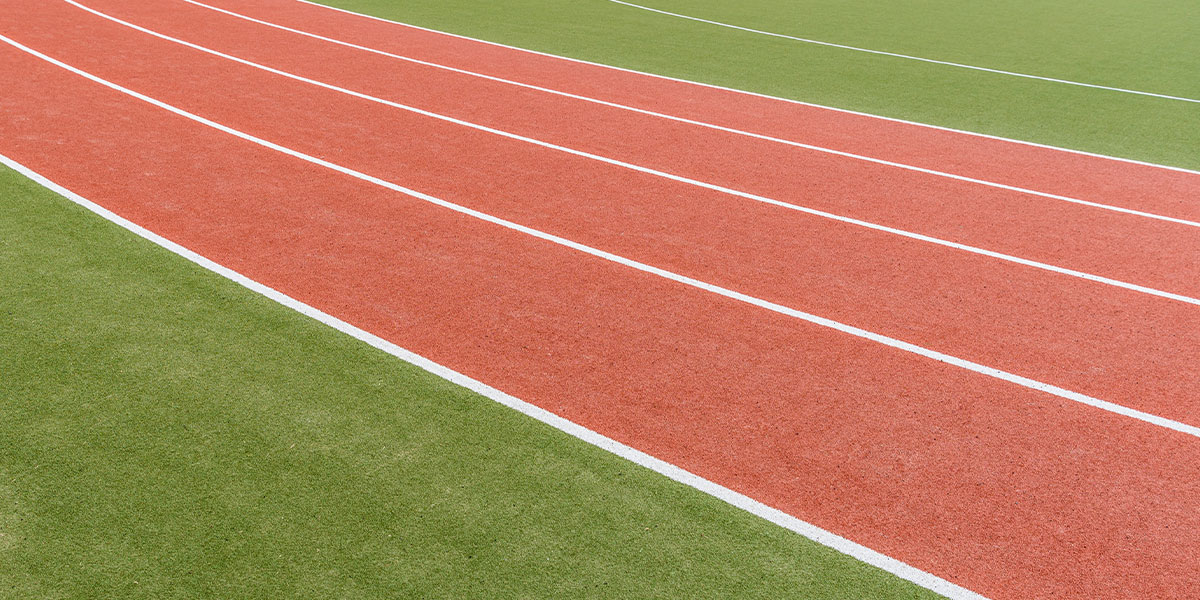
Professional Athletics Track Surface Types
Modern sports science has replaced old cinder and clay fields with advanced polymeric formulations. Choosing the right surface type depends directly on the facility's budget, expected traffic density, and competition level. At Integral Spor, we manufacture three core certified synthetic systems:
Technical Comparison: Sandwich, Full Pur, and Spray Coating Systems
To assist architects and project developers in making the correct architectural choice, here is the official technical breakdown of professional athletics track surfaces:
| System Type | Layer Structure & Composition | Thickness | Primary Advantage & Best Use Case |
|---|---|---|---|
| Full Polyurethane (Full PUR) System | Multi-layered cast polyurethane resin mixed with full EPDM rubber granules. Non-porous. | 13mm to 15mm | Elite Level: Ultimate spike resistance, maximum energy return, designed for Class 1 Olympic Stadiums. High longevity. |
| Sandwich System | Base layer of SBR granules bound with PU, sealed, topped with a cast PU layer and embedded EPDM granules. Non-porous. | 13mm to 14mm | Professional & Commercial: Perfect balance of cost and performance. Ideal for regional stadiums, universities, and multi-sport facilities. |
| Spray Coating (Structural Spray) System | Base layer of SBR granules bound with PU, finished with a sprayed mixture of PU polymer and fine EPDM granules. Porous. | 13mm | Budget-Friendly: Highly water permeable (porous), cost-effective initial investment. Excellent for schools, community parks, and training fields. |
Architectural Stages of Athletics Track Construction
Building a World Athletics-compliant track requires meticulous civil engineering, specialized paving equipment, and absolute surface planarity. The engineering lifecycle consists of 7 major execution phases:
1. Sub-base Engineering and Design
Before breaking ground, comprehensive soil mechanics and topography tests are conducted. Architectural blueprints are drafted to calculate exact runoff angles, lane lines, and safety clearance zones surrounding the track perimeter.
2. Ground Excavation & Compaction
The natural soil is excavated to the designated depth. Heavy industrial machinery levels, stabilizes, and compacts the earth base to prevent any future structural shifting or localized subterranean subsidence.
3. Advanced Drainage System Installation
To avoid water accumulation and hydroplaning risks, a specialized perimeter drainage infrastructure (slotted drainage channels) is built along the inner and outer kerbs. The sub-base is sloped slightly (maximum 1% lateral gradient) to guarantee continuous gravity-fed rainwater evacuation.
4. Asphalt & Substructure Base Laying
A dual-layer load-bearing base consisting of graded crushed stone aggregates followed by a flawless application of binder-course asphalt is laid down. Achieving maximum flatness here is critical, as any sub-base unevenness will compromise the synthetic rubber layer.
5. Polymeric Base Layer Application
For Sandwich and Spray systems, a baseline mixture of black SBR (Styrene Butadiene Rubber) granules and specialized flexible polyurethane binders is paved evenly using specialized automated tracking machines.
6. Premium EPDM Top Coating & Sealing
Depending on the chosen system (Full PUR, Sandwich, or Spray), the professional top layer is applied. High-grade, UV-stabilized EPDM (Ethylene Propylene Diene Monomer) granules are embedded into liquid polyurethane. This layer provides the final traction, bright color (traditional brick red or athletic blue), and spike resistance.
7. Precision Line Marking and Certification
Utilizing highly calibrated laser equipment and specialized weather-proof poly-paints, certified technicians draw the official lanes, start/finish lines, hurdle positions, and exchange zones in absolute accordance with World Athletics rulebooks.
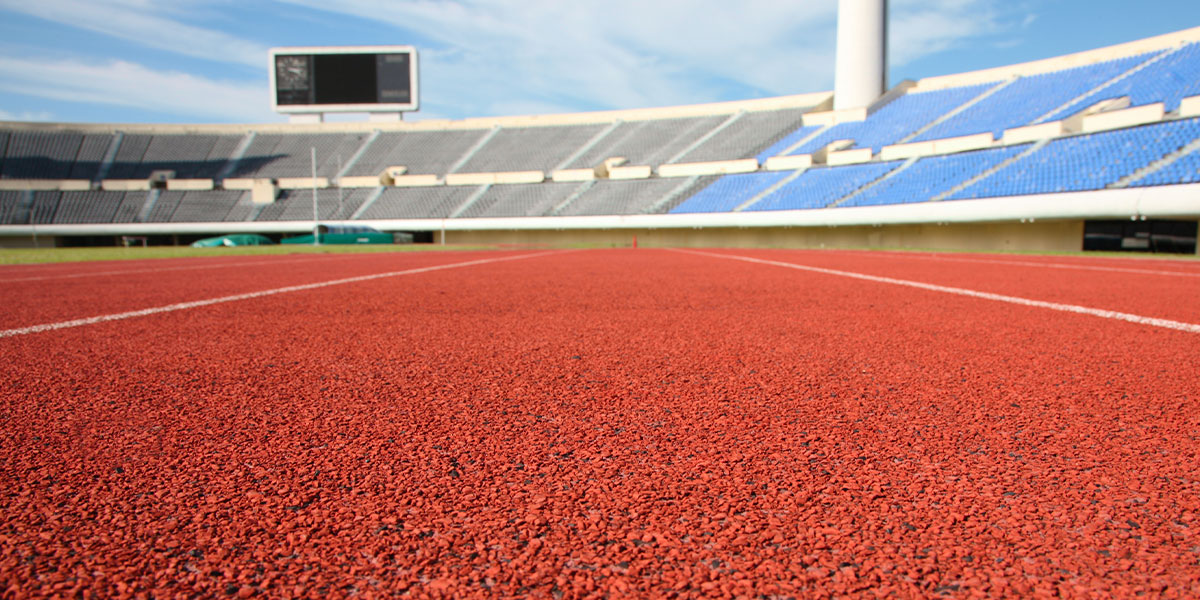
Why Partner with Integral Spor for Athletics Track Construction?
As a globally recognized sports infrastructure manufacturer and general contractor, Integral Spor delivers world-class engineering solutions for turnkey stadium developments across Europe, the Middle East, Africa, and the Americas.
Our Comprehensive Turnkey Capabilities Include:
- Full World Athletics Compliance: We engineer fields specifically tailored to achieve official Class 1 and Class 2 stadium certifications.
- In-House Manufacturing: Our synthetic turf, EPDM granules, and high-performance polyurethane binders are manufactured under strict ISO quality control protocols.
- Specialized Engineering Crews: Our deployment teams utilize advanced automated paving machinery to ensure perfect surface planarity and seamless chemical adhesion.
- Global Logistics & Turnkey Supply Chain: From South America to the GCC region, we manage shipping, customs clearance, site excavation, and technical execution seamlessly.
- End-to-End Stadium Infrastructure: Beyond the track, we provide stadium seating, sports lighting, surrounding padel court installation, and professional hybrid football pitch turf.
In conclusion, a premium athletics track is a highly sophisticated civil engineering project that directly determines athletic safety, record validity, and facility lifespan. For detailed architectural specifications, material datasheets, or a localized turnkey project quotation, contact our technical sales division at Integral Spor today.
Other News
23/10/2026
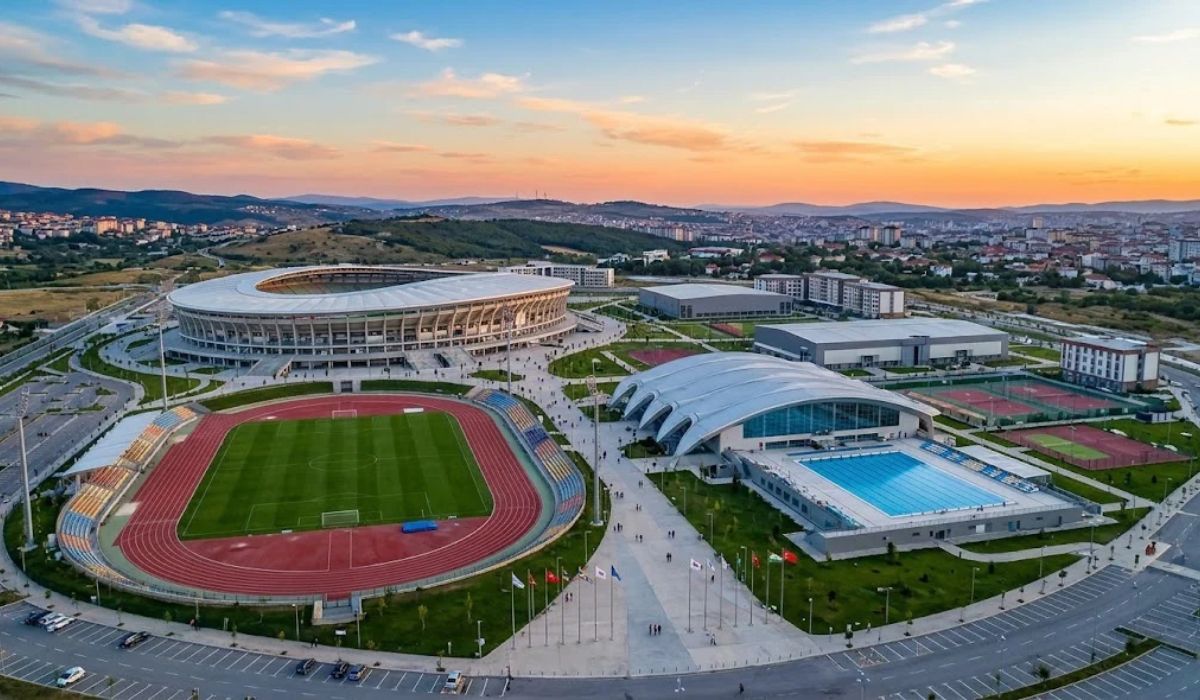
An Olympic sports complex typically includes a stadium, an athletics track, an Olympic swimming pool, indoor sports halls, outdoor fields and courts, plus stands, locker rooms and supporting infrastructure. The full list varies with the project's purpose, the sports hosted and the size of the site.
21/10/2026
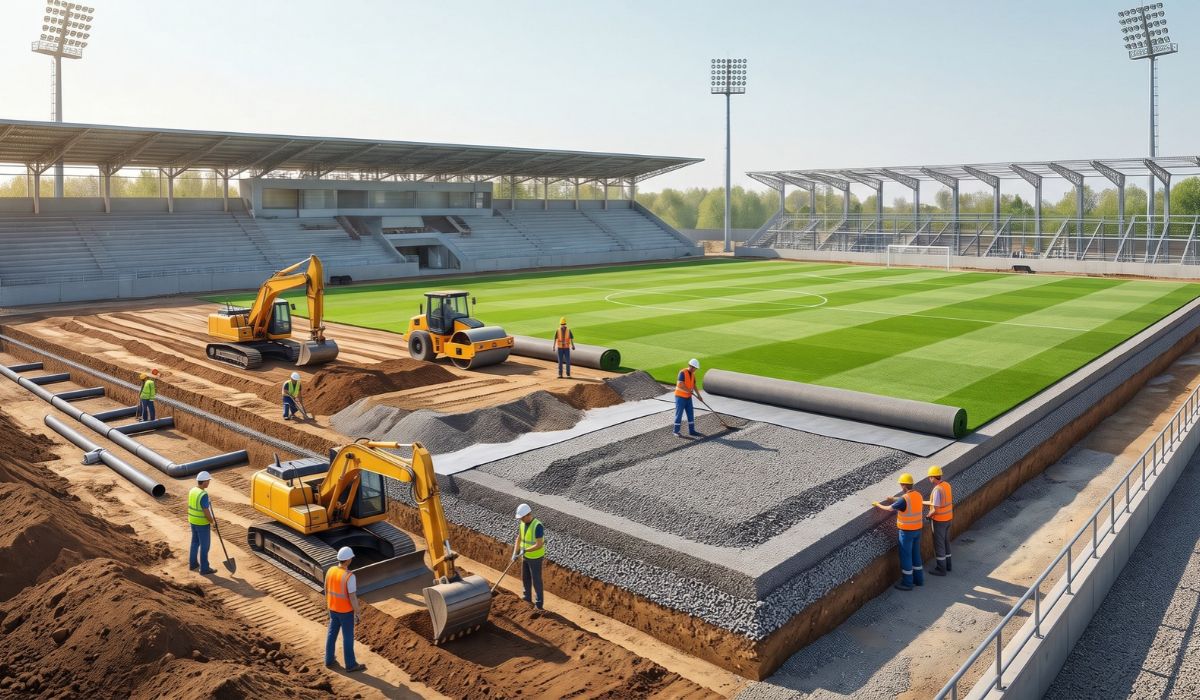
Football field base construction involves a soil survey, excavation and grading, drainage lines, compacted crushed stone load-bearing layers and a smooth fine-grading layer. Artificial, natural or hybrid turf is then installed on top. Layer thicknesses vary with the soil, the project design and the product manufacturer's specification.
15/10/2026
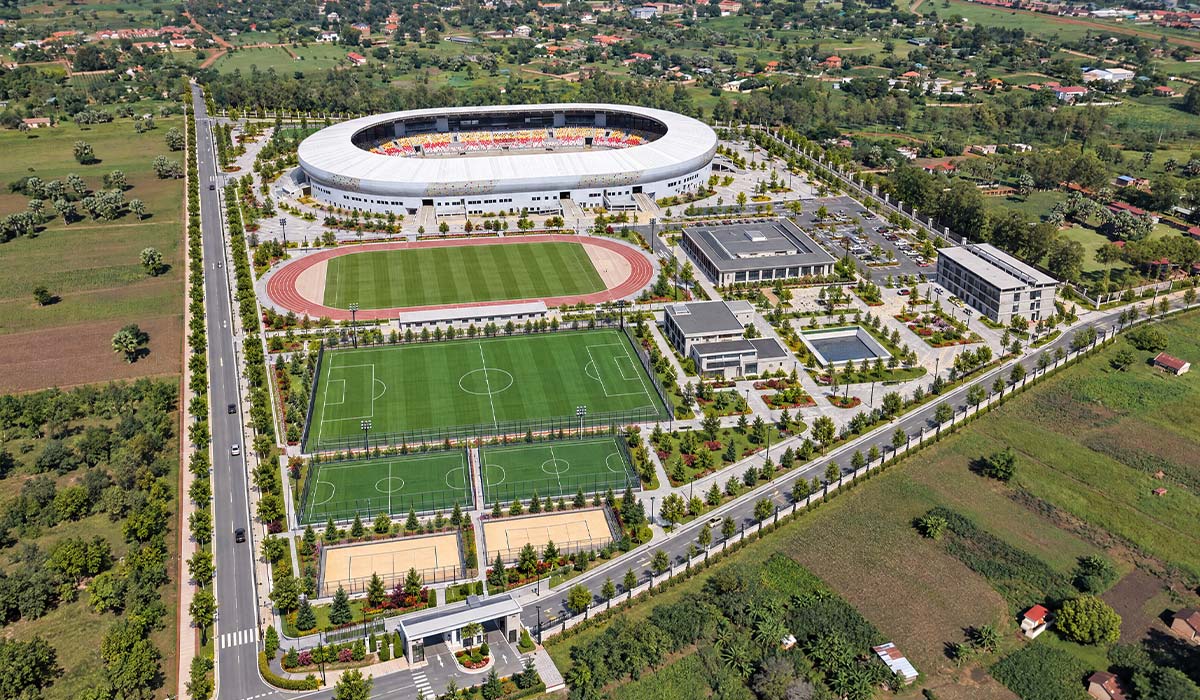
Bring irrigation, lighting, energy, and security together in a single system with AI-powered smart stadium construction. Discover smart transformation with Integral Spor.

09/09/2026
Flag football is heading to the Olympics in 2028. Here is what investors need to know about field dimensions, construction requirements and the factors that drive cost.
08/09/2026
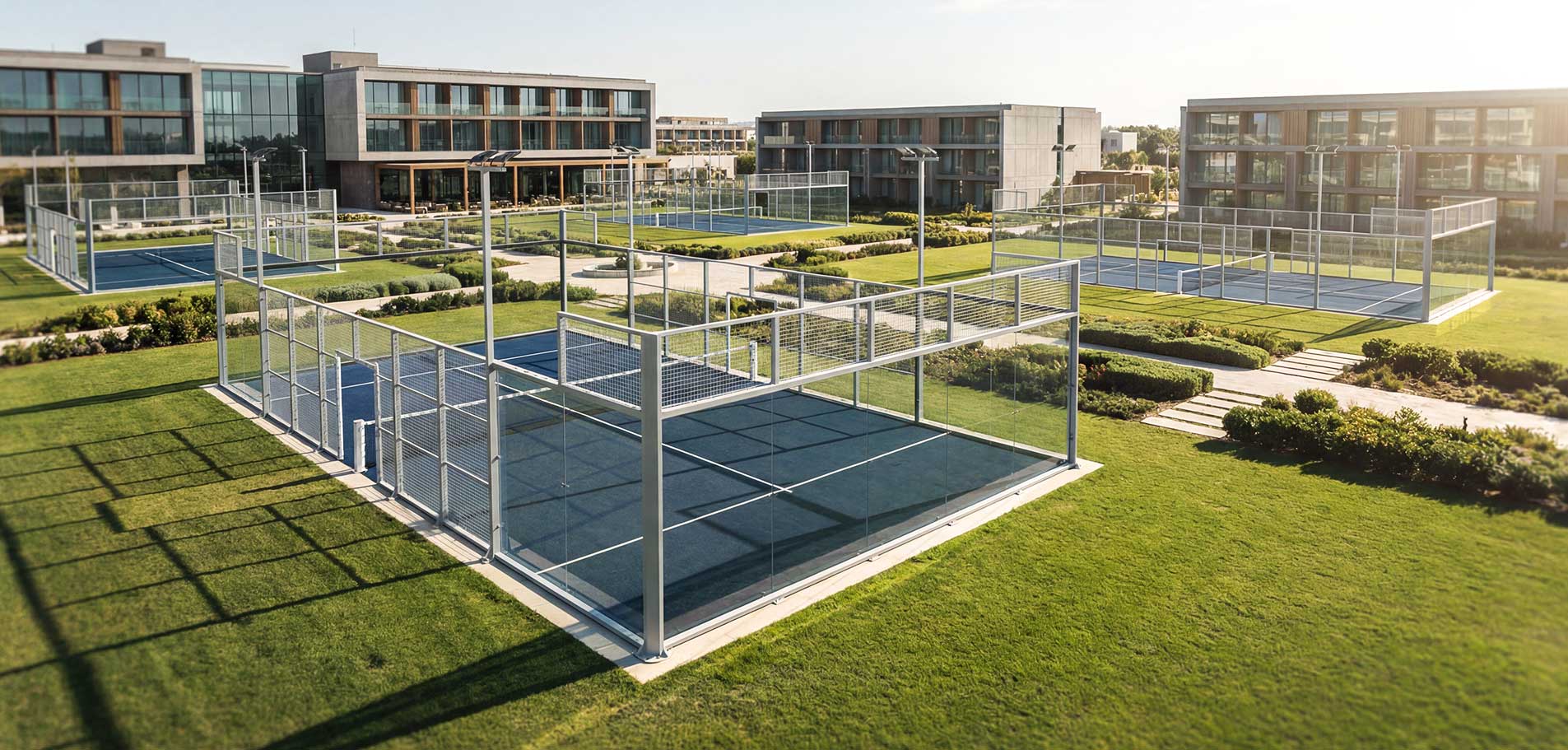
Converting an unused tennis court into a padel court turns space you already own into a new investment opportunity. Here is how the conversion works, what it costs, and which court type fits your site.
19/08/2026
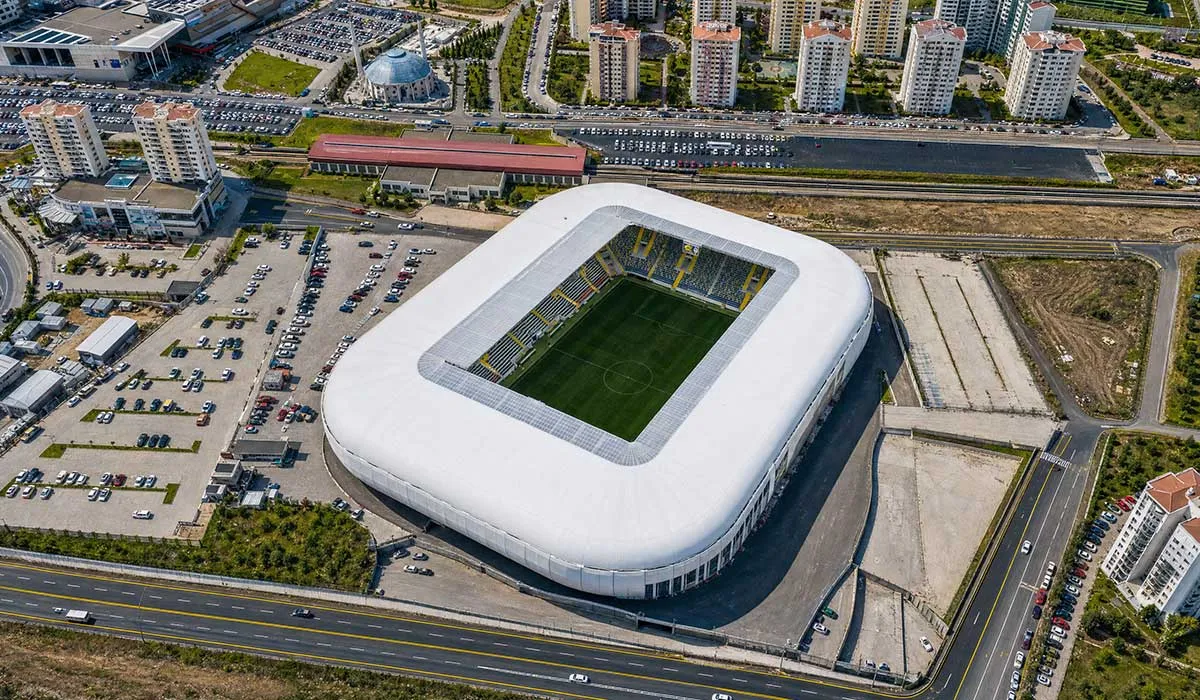
Renovation, modernization and capacity expansion for existing sports facilities, from stadiums to indoor arenas. Discover how the right engineering can take your venue to the next level.